AI Overviews: understand the answer box, then become one of its sources.
AI Overviews are the AI-generated summaries Google places above the classic blue links, with links to the handful of pages they drew from. You cannot request one: Google decides query by query. For a business, the question is no longer where you rank on the page, it is whether your page is one of the ones quoted in that box.
Check if the engines cite you3 minutes, no credit card. No install.
What are AI Overviews?
An AI Overview is a summary written by Google's AI and shown at the top of the search results, ahead of the ordinary listings. It answers the question directly and displays the web sources it leaned on next to the text. Google describes it as a core Search feature, in the same family as knowledge panels, not as an experiment bolted on the side.
You will see it written as AI Overview and AI Overviews, and you will see it confused with AI Mode, which is a different thing covered further down. The overview does not replace the results list, it sits on top of it. The reader takes the answer, and then maybe clicks a source. Everything that matters for a publisher is inside that "maybe".
Why am I getting AI Overviews?
Because Google now treats them as a standard part of Search, not an opt-in. They show up more often on questions phrased in natural language, longer queries, and questions that bundle several sub-questions together. Short navigational or transactional queries still tend to return plain links.
The display also depends on language, country and device, which is why two people typing the same thing at the same moment can see different pages. If you are checking whether a query triggers an overview in your market, one manual look proves nothing. You have to watch the same query over time.
How do I get AI Overviews?
There is no switch to turn them on, and no setting that guarantees one. Google decides per query. The closest thing to control on the user side is how you phrase the search: full questions in natural language surface them far more reliably than keyword fragments.
On the publisher side the answer is the same in reverse. No special markup exists for AI features. Google Search Central states that eligibility follows ordinary Search rules, which means a page blocked from crawling, left out of the index, or absent from the results for that query simply cannot be cited in an overview.
Should I trust Google AI Overviews?
Treat them the way you would treat any summary written by someone else: useful for orientation, not a substitute for the source. That is precisely why the overview lists its links. On anything with real consequences, medical, legal or financial, open the sources and read them.
The comparison worth making is not overview versus source link, it is overview versus the alternative you would actually have used. A summary that condenses five pages can be faster and still be wrong on the one detail that mattered to you. Google itself is visibly more conservative on sensitive topics, falling back to ordinary results more often there.
How can I turn off AI Overviews?
There is no official permanent off switch. The route Google provides is the "Web" filter above the results, which returns text links only, with no generated block. It applies to the search you are running, not as a saved account preference.
This is one of the most searched questions around the feature, and it is worth flipping around if you run a website. Your visitors are not filtering anything. They read what the engine puts in front of them. Betting on mass opt-out is betting against the default.
AI Overviews and AI Mode: what is the difference
An AI Overview is a block placed above the normal results; AI Mode is a separate, conversational search experience where you keep asking follow-up questions. In the first you still have the results page in front of you, in the second it gives way to a thread of answers.
For a publisher the underlying mechanic is the same. Both rely on web sources they cite, and both select specific passages rather than whole pages. A page built to be quoted in an overview is a candidate in both. Our query fan-out page explains how a single question gets exploded into several internal searches before any answer is written.
What sources do AI Overviews pull from?
From the indexed web, not a separate database. Google cross-checks several pages it already considers relevant for the query, extracts passages, and shows the matching links beside the summary.
A classic result ranks your page
A position, a title, a snippet, a click to win. The whole page is offered to the reader, who judges from the extract and decides whether to open it.
An AI Overview quotes a passage
The unit selected is no longer the page, it is a paragraph. Anything that only makes sense after three screens of context cannot be lifted. Anything self-contained can.
Solid Google ranking work stays the entry ticket: overviews draw heavily on pages that already rank. They add a layer, they do not remove the one underneath.
How to optimize your content for AI Overviews
There is no hidden setting. Four levers decide whether an overview reaches for your page or a competitor's.
An answer in the first sentence
An AI Overview lifts passages that stand on their own. A section that answers in two sentences, before any build-up, can be quoted without being distorted. A long warm-up gets skipped entirely.
Authority a model can verify
A named author, real experience, sources you cite yourself, and a page that already ranks for the query. Google Search Central is explicit that AI features run on the same ranking systems as ordinary Search, so nothing you already do for SEO is wasted here.
Entities and structured data
Name your products, places and people the same way every time, and mark pages up with schema.org. A model that is unsure who you are will not risk quoting you.
One consistent story
The same facts, without contradiction, across your site, your listings and third party coverage. An overview cross-checks several pages before it commits. Anything that contradicts itself gets dropped.
The same four levers carry across engines. They are what our hub on getting cited by AI covers, and what decides whether you get quoted by ChatGPT, by Perplexity or by Gemini.
How do I know whether my site is cited in an AI Overview?
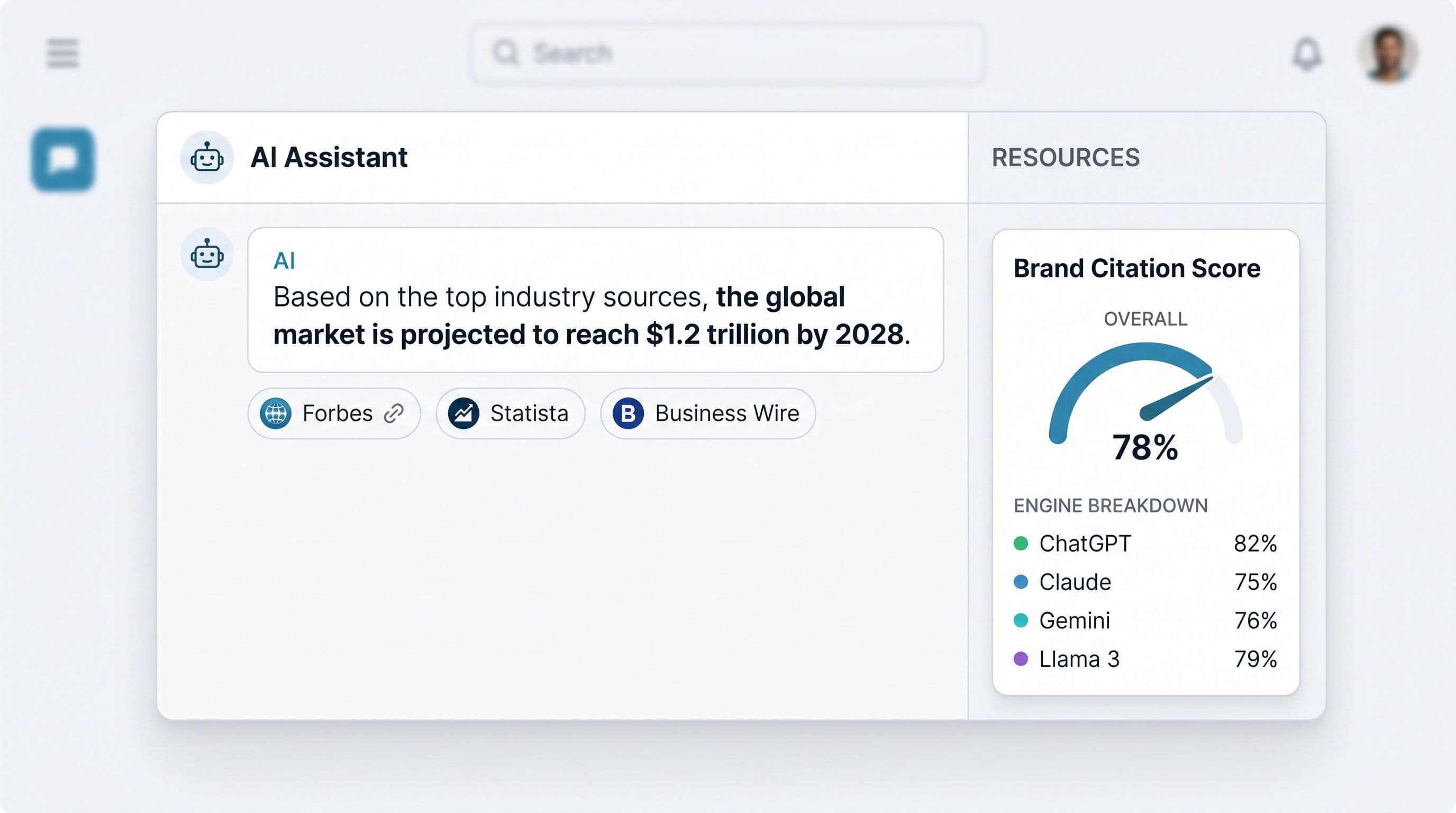
By asking your key questions again and again, on a schedule, and recording the sources that come back. No console does it for you: Search Console does not separate an impression earned inside an overview from an ordinary one. BotSEO runs that loop for you and returns a citation score per engine, with the pages that earned each mention and the competitors quoted instead of you.
- Which queries in your market trigger an AI Overview, and which still return plain links
- The sites cited inside those overviews, yours and your competitors'
- Which of your pages the engines reach for, and which they never touch
- The questions where you appear nowhere at all
- A prioritized list of pages to rewrite first
Seven AI agents work on your project, from content to technical, in the same workspace as your SEO audit.
What if an AI Overview says something wrong about your business?
Find the source of the error first, because an overview rarely invents from nothing. It repeats, sometimes badly, something it found somewhere: an old page of yours, a stale listing, a directory entry, an outdated press article. Fix the source, then worry about the overview.
Google offers user feedback directly under the block, which lets you flag problem content. That is useful but slow, and it never replaces fixing the root. Correct information, repeated without contradiction across your pages and the third party sources that mention you, wins mechanically, because the model cross-checks before it commits.
This is also the argument for monitoring. Without a regular check, a wrong claim can circulate in generated answers for months without anyone on your side noticing.
Frequently asked questions about AI Overviews
Why am I getting AI Overviews?
Because they are now a standard part of Google Search rather than something you opt into. They appear far more often on longer, natural-language questions, and the display varies by query, language, country and device.
How do I get AI Overviews?
There is no setting that turns them on. Google decides per query. Phrasing the search as a full question in natural language surfaces them much more reliably than typing two or three keywords.
How do I turn off AI Overviews in Google?
There is no permanent off switch. Use the "Web" filter above the results to get text links only. It applies to the current search rather than as a saved account preference.
Should I trust Google AI Overviews?
Use them for orientation and verify anything that matters. The overview shows its sources for exactly that reason. On medical, legal or financial questions, open the links and read the original.
How do I get my content featured in an AI Overview?
Rank for the query first, then make the passage liftable: a direct answer in the opening lines of the section, verifiable facts, a named author, consistent entity naming and schema.org markup. There is no dedicated markup for AI features.
Do AI Overviews replace SEO?
No, they run on top of it. The pages cited in an overview are overwhelmingly pages already indexed and ranking for the query. SEO is the entry ticket; extractability decides the citation.
See whether the engines already cite you
Enter your site and get the questions your market asks, the sources the engines quote, and the pages worth rewriting first. You can also compare BotSEO plans.
Start free3 minutes, no credit card
No installSearch visibility and AI citations together