
ChatGPT
Retrieval heavy and widely used, ChatGPT is where most brand recommendation questions land. We record the mentions and the browsing sources behind them.
You can guess whether ChatGPT recommends you, or you can measure it. BotSEO runs your market questions through ChatGPT, Claude, Gemini, Perplexity and Grok, records which brands come back in the answers, which sources the models leaned on, and how all of it moves week after week.








More than 800 professionals already grow their visibility with BotSEO
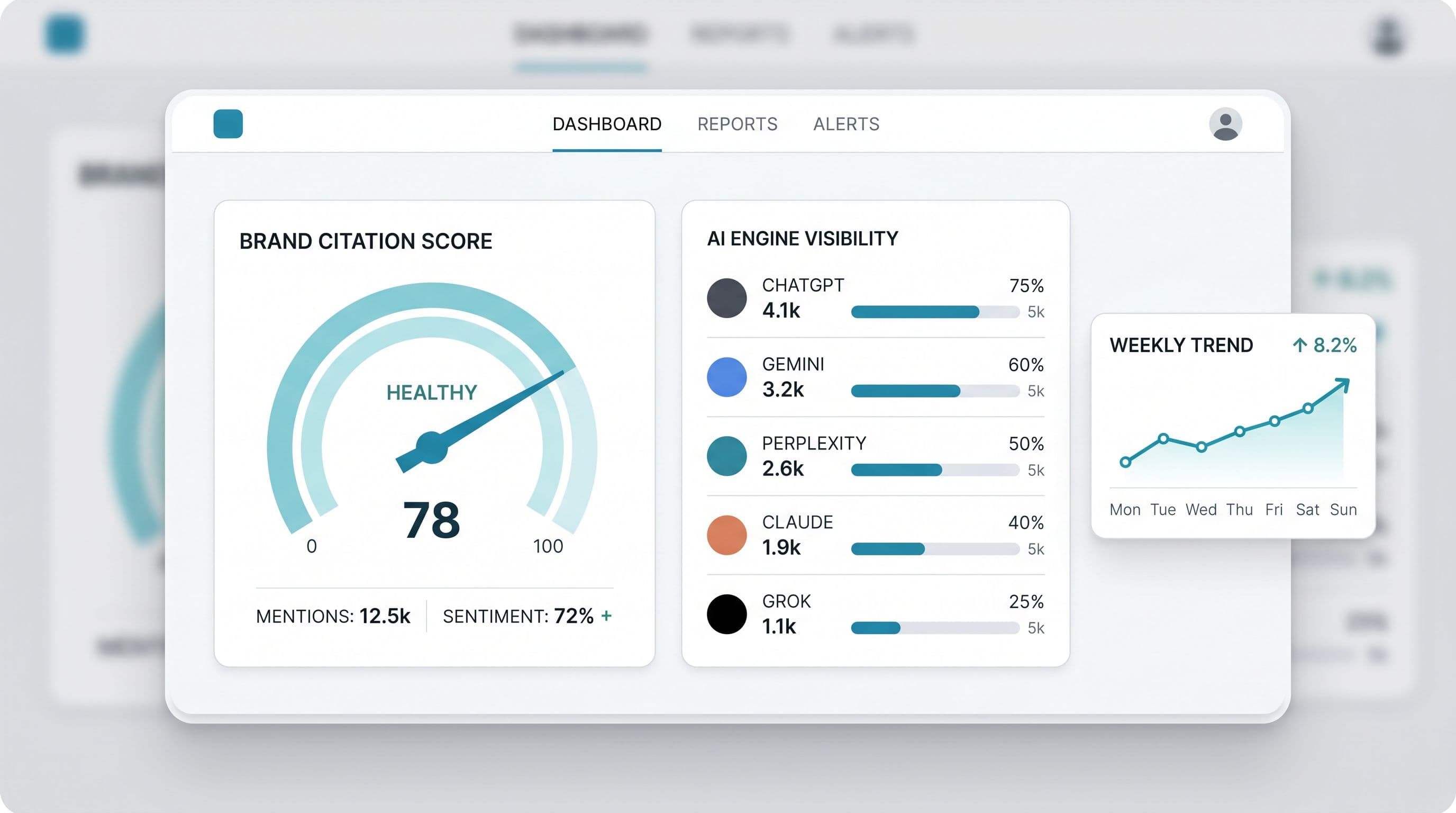
AI search optimization is the work of getting named inside the answers that generative engines write, and of proving whether that is happening. The proving half is the one most teams skip, because there is no Search Console for ChatGPT: no impressions, no average position, no export. The only reliable method is to ask the models directly, at scale, on the questions your buyers really type, and to count what comes back. That is what BotSEO does. It sends a defined set of prompts to each engine, reads every answer, extracts the brands mentioned and the sources cited, then stores the result so the next run can be compared with the last one.
Each model has its own training data, its own retrieval layer and its own habits about which sites it trusts. Being cited by one says almost nothing about the other four, so we ask them all the same questions.
Retrieval heavy and widely used, ChatGPT is where most brand recommendation questions land. We record the mentions and the browsing sources behind them.

Claude answers long consideration questions in detail and tends to name fewer brands, which makes each mention worth tracking closely.

Gemini leans on the Google index, so what you rank for often shapes what it says about you. Comparing the two is instructive.

Perplexity always shows its sources, which makes it the clearest window into which pages actually feed the answers in your market.

Grok pulls heavily from live social conversation, so it surfaces a different slice of your reputation than the other four.
Traditional analytics stop at your own site. Everything that happens inside an AI answer happens before the click, and often instead of it.
A model either includes your brand in its answer or it does not, and there is no page two to slip onto. It also describes you in its own words, sometimes with outdated pricing or a service you dropped. Both only surface if you ask the models directly.
Every answer that does not mention you mentions somebody. Recording the competitor set per question tells you who the models currently treat as the default choice in your category.
Models rarely cite a homepage. They cite comparison articles, directories, forum threads and documentation. Knowing which sources recur in your market tells you where the influence sits.
Four steps, repeated on a schedule so the numbers become a curve instead of an anecdote.
We start from your activity and your keywords and generate the questions a real buyer would ask an assistant: best tool for a job, alternatives to a competitor, who to hire in a city, how to solve a specific problem. You can edit the list and add your own.
Each prompt is sent to ChatGPT, Claude, Gemini, Perplexity and Grok. These are real calls producing real answers, not an estimate derived from a keyword database.
Every answer is parsed for brand mentions, competitor mentions and cited URLs. A mention counts when the model names you, whether or not it links to you, because in an AI answer the name often travels further than the link.
The run is stored and repeated. You see your citation rate per engine over time, which questions you gained, which you lost, and which sources started or stopped appearing in your market.
The point is not a single vanity score. It is being able to answer a specific question at a specific moment: on the questions that matter to my business, how often do the models name me, and is that number going up.
LLM SEO covers both halves of the same job. One half is the writing and structuring work that makes a page easy for a model to quote: clear answers near the top, verifiable facts, consistent naming across the web, and sources that back you up. The other half is checking whether any of it worked. Skipping the second half is how teams spend six months producing content for AI engines without ever confirming that a single answer changed. Anaëlle, the BotSEO agent in charge of brand visibility, runs the probes and keeps score per engine, so measurement is the starting point here. The optimization playbook lives on our answer engine optimization page. Measure to find where you are absent, optimize, then measure again.
Standalone AI visibility trackers are priced as a category of their own, usually at agency rates for what amounts to a scheduled set of prompts. At BotSEO the monitoring is part of the suite, alongside the technical audit, the rank tracking and the content work that actually move the number.
29 EUR
per month, whole suite included
≈ 31 USD
Billing is in euros. The dollar figure is an indicative conversion only.
Start freeChatGPT SEO is the narrow version: optimizing to be named specifically by ChatGPT. AI search optimization is the whole surface, because ChatGPT is one engine among several and each one decides differently. A page that Perplexity quotes constantly can be invisible to Gemini. Working on ChatGPT alone means optimizing for one referee and hoping the others agree.
By asking the engines directly instead of waiting for a report they do not publish. A fixed set of prompts is sent to each model, the answers are recorded and parsed, and the same set is sent again later. It is closer to a repeated survey than to a log file, and the value comes from repeating it under identical conditions so the comparison holds.
Yes, models are not deterministic and the same question can produce a slightly different answer. That is exactly why a single manual test proves nothing and why the measurement runs on a set of prompts repeated on a schedule. What matters is the rate across many answers and its direction over time, not one lucky reply you screenshot.
It helps, and for Gemini in particular it helps a lot, since it leans on the Google index. But it is not a guarantee. Models also weigh how quotable a page is, how consistent your information looks across the web, and whether independent sources back you up. Sites that rank well and get cited rarely are common, which is precisely the gap the measurement exposes.
Start with the ones where the intent matches what you sell and where the cited sources are pages you could realistically appear on or answer better. Sometimes the fix is your own content, sometimes it is a mention on the third party page every model keeps quoting. The optimization side is covered on the answer engine optimization page.
Run your first citation measurement and see which of the five engines name you today, on which questions, and who they name instead. It takes a few minutes and no credit card.
Start freeNo credit card · First measurement free · Five engines covered