Local SEO that gets you into the map pack
Four out of five local searches end at a business within a few miles of the searcher. If you are not in the three results Google shows on the map, the rest of your SEO barely matters. BotSEO audits your Google Business Profile, reads your reviews and tracks your position neighborhood by neighborhood.
- No credit card
- Results in about 3 minutes
- Nothing to install








More than 800 professionals already grow their visibility with BotSEO
What is local SEO?
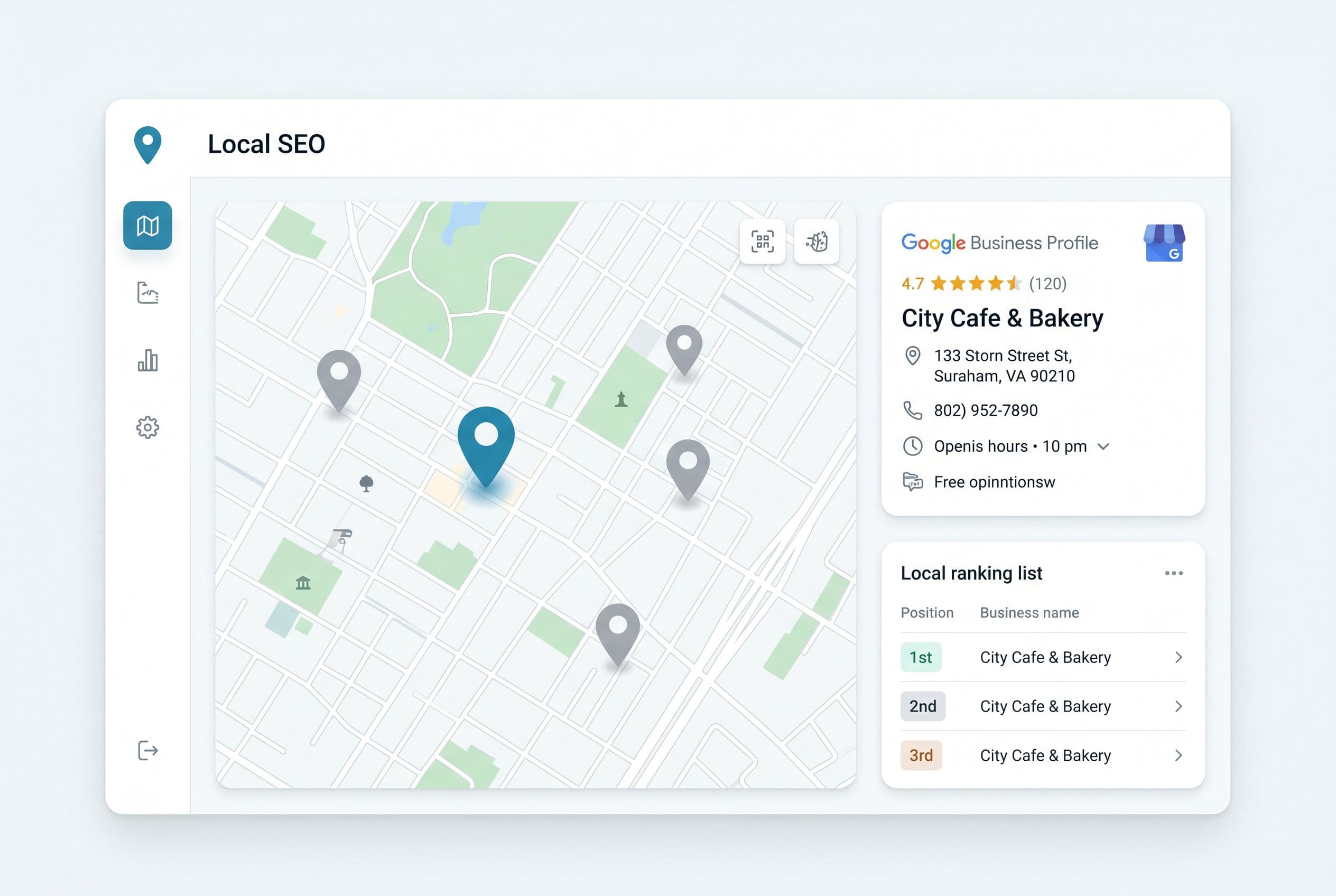
Local SEO is the work of ranking for searches that have a place attached to them: a service plus a city, or anything followed by near me. It is a different game from national SEO because Google answers those queries with the map pack, the three businesses shown above the regular results, and it picks them mostly on proximity, relevance and prominence rather than on how many backlinks your homepage has. In practice that means your Google Business Profile, your reviews and the consistency of your name, address and phone number across the web carry more weight than anything you publish on your blog.
What decides your local ranking
Six signals do most of the work. None of them requires a developer, and most businesses are neglecting at least three.
Google Business Profile
Primary and secondary categories, hours, service area, photos, attributes and description. A profile filled in properly is the single largest lever on map pack visibility, and most are half empty.
Reviews
Volume, average rating, recency and whether you reply. Google reads them as a trust signal and so do customers, who scan the last three reviews before they call. A profile that stopped collecting reviews a year ago looks closed.
NAP consistency
Your name, address and phone number must match everywhere: your site, your profile, directories, old listings you forgot about. Every variation splits the signal and makes Google less confident about who you are.
Local keywords
Your pages and your profile have to use the words customers use, which means the service and the place: the neighborhood, the city, the county. That is what triggers the match on service plus location queries.
Citations and directories
Mentions of your business on directories and industry sites confirm that you exist where you claim to. They help as long as they stay consistent, and actively hurt when they contradict your profile.
Proximity and tracking
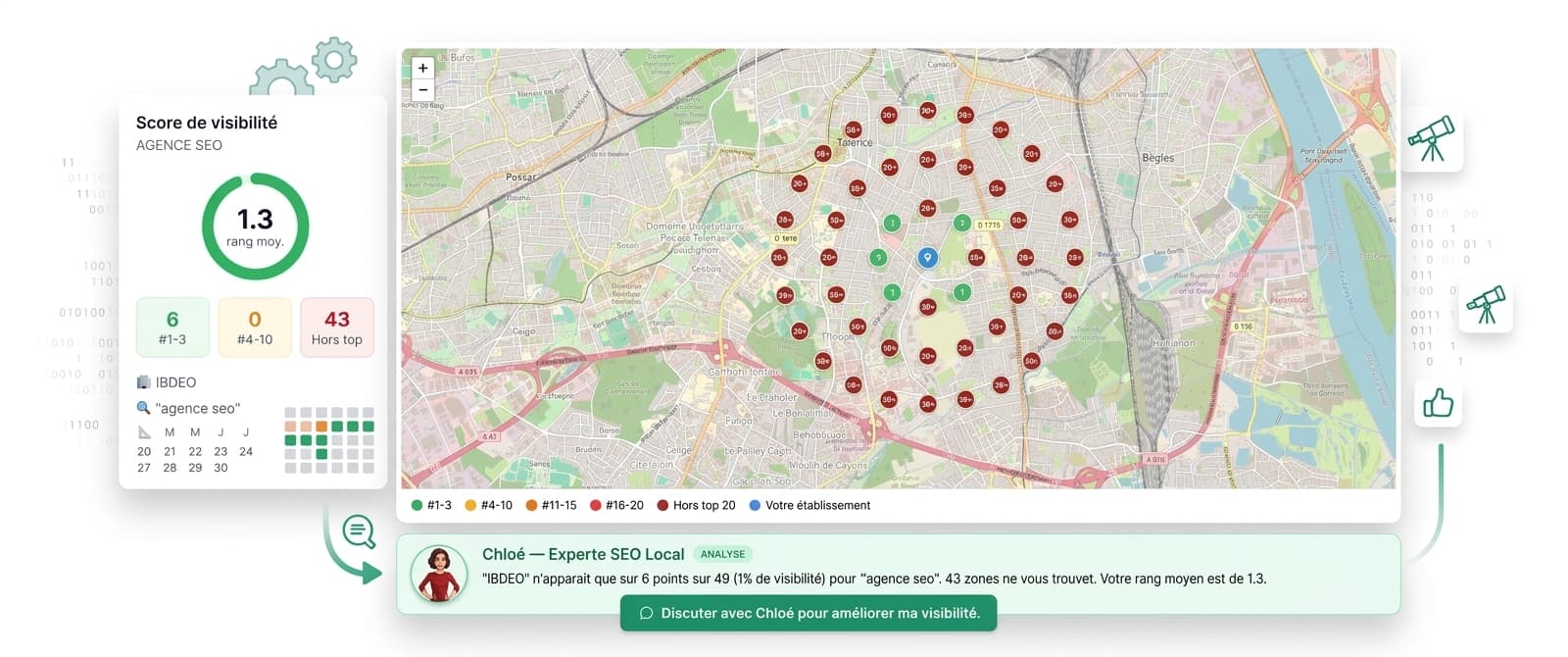
The same query returns different results a mile away. A single national rank number hides that completely, which is why local positions have to be measured from several points around your service area.
How BotSEO handles local SEO
Chloé is the agent who owns everything that happens on the map. Here is what she actually does.
Profile audit and score
Your Google Business Profile is scanned and scored out of 100: categories, hours, photos, attributes, description length, and the fields competitors have filled that you have not. You get a ranked list of what to fix, not a vague grade.
City by city rank tracking
Positions are measured locally, city by city and device by device, so you see where you genuinely appear in the map pack and where you drop off the first screen entirely.
Review analysis
Chloé reads your reviews for the terms customers keep repeating, flags the ones still waiting for a reply, and helps you ask satisfied customers at the moment they are most likely to say yes.
Competitor comparison
The businesses currently occupying your map pack are pulled apart next to you: their categories, their review counts, their photo volume. You see exactly what separates you from the third slot.
Who local SEO is for
Any business where the customer has to physically reach you, or you them.
- Restaurants, cafes and bars competing on a single street
- Dentists, clinics and law firms in a crowded metro area
- Plumbers, electricians and contractors covering a service area
- Salons, gyms and studios that live on repeat local traffic
- Multi location retailers who need each store to rank on its own
- Real estate agents and brokers working defined neighborhoods
Local search is moving into AI answers
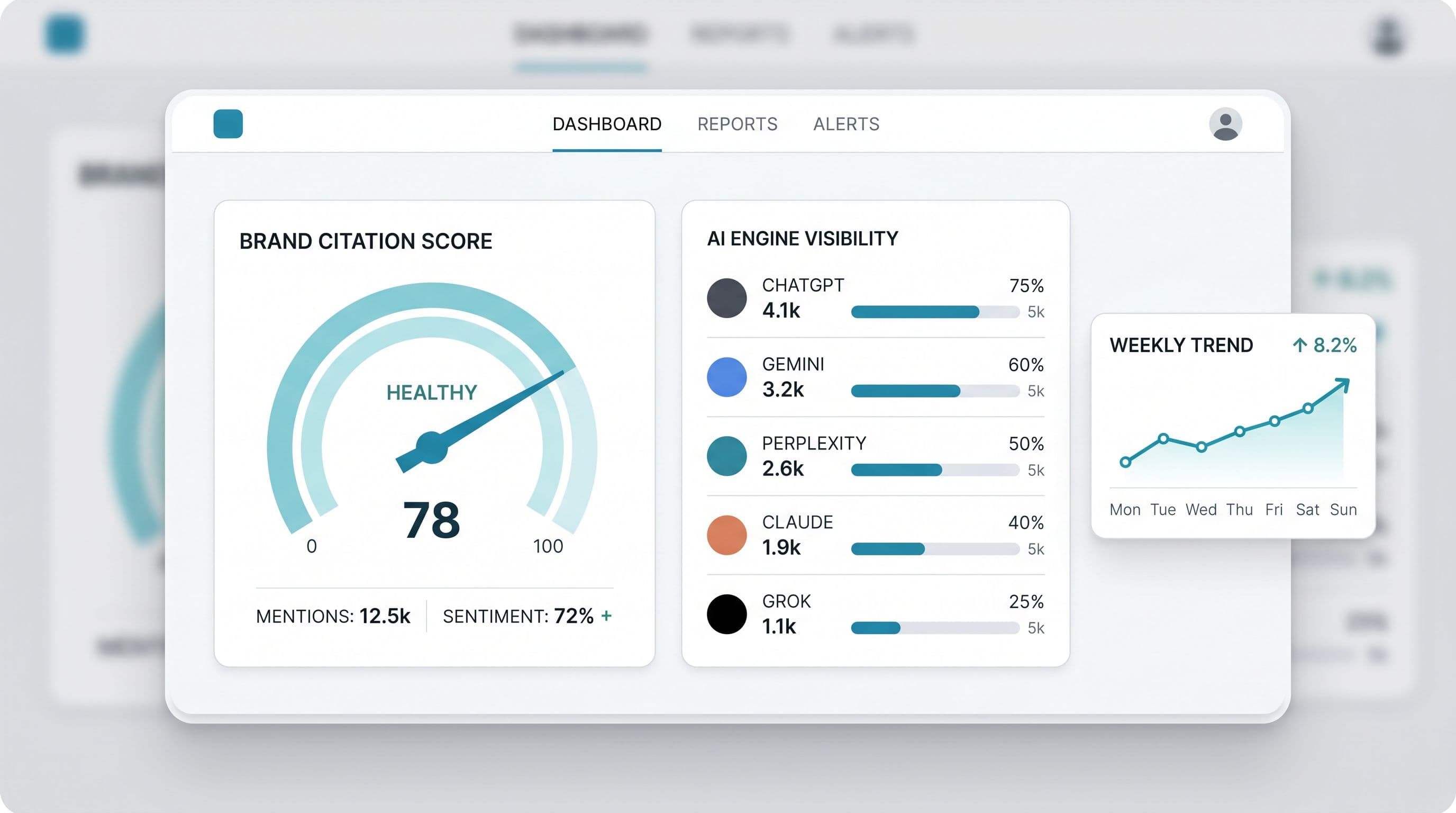
People are starting to ask ChatGPT and Perplexity for a recommendation the way they used to ask Google Maps. Those answers are assembled from your profile, your reviews and what third party sites say about you, which means local SEO and AI visibility have quietly become the same project.
- BotSEO checks whether AI engines name your business when asked about your category and city
- It shows which competitor sources they quoted instead of you
- The same profile and review work feeds both the map pack and the AI answer
- Nothing here requires a separate tool or a separate budget
Questions about local SEO
How long does local SEO take to work?
Faster than national SEO. Profile fixes, category corrections and new photos can move you inside a few weeks, because Google recomputes local relevance often. Review volume and citation cleanup build over a few months. It is one of the few areas of search where a single afternoon of work can produce a visible result.
Do I need a physical address?
Not necessarily. Service area businesses that travel to the customer, like plumbers or mobile groomers, can hide the address and declare a service area instead. What you cannot do is invent an address or rent a mailbox to fake a presence, which is one of the fastest ways to get a profile suspended.
How many reviews do I need?
There is no threshold, only a comparison. What matters is how you look against the businesses already in your map pack. If they average 80 reviews and you have 12, that gap is your project. Steady recent reviews beat a large pile that stopped two years ago.
Should I create a separate page for every city?
Only if you genuinely serve them and can write something specific about each one. Ten near identical pages with the city name swapped is the oldest trap in local SEO and Google handles it well. Two or three real pages with local detail, staff, projects and directions outperform twenty templated ones.
Why do I rank differently depending on where I search from?
Because proximity is a ranking factor in itself. Google shows the searcher what is close to them, so your position genuinely changes street by street. Checking your own rank from your office tells you almost nothing, which is exactly why BotSEO measures it from multiple points.
Is local SEO worth it for a single location?
It is usually the highest return work a single location business can do. The competition is a handful of businesses rather than the entire internet, the signals are under your control, and the traffic converts because the searcher is nearby and ready to act.
See where you rank on the map today
Run the free local audit, get your profile score and your position city by city, and find out what is keeping you out of the top three.
Run a free local auditNo credit card · Results in about 3 minutes · Nothing to install